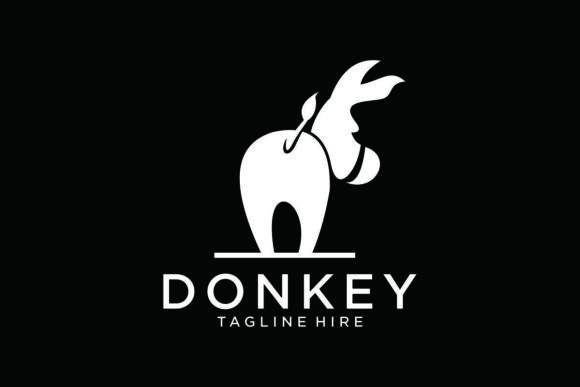
Unleashing Character: The Crazy Donkey Silhouette Logo Vector
There’s a fine line between a design element that simply sits on a page and one that genuinely connects with an audience. As someone who has spent years navigating the worlds of brand strategy and design, I’m always searching for assets that offer more than just a pretty shape. I look for personality. The Crazy Donkey Silhouette Logo Vector is one of those rare finds. It’s not just a clipart image of a farm animal; it’s a distinct character piece brimming with humor, warmth, and a surprising amount of versatility. In a market saturated with sleek, minimalist marks, this donkey offers a breath of fresh air—a chance to build a brand identity that is approachable, memorable, and undeniably friendly.
Decoding the Personality: More Than Just a Silhouette
At first glance, you might categorize this simply as a vector asset for a farm or a zoo. While it certainly fits there, its appeal runs deeper. The "crazy" aspect of the design is key. This isn’t a stiff, formal illustration of a mammal standing at attention. It likely captures the animal in a moment of playfulness—perhaps with a tilted head, a goofy smile, or a swishing tail. This injects a sense of humor and levity into a project. For entrepreneurs and small business owners, this is gold. It instantly signals to your audience that you don’t take yourself too seriously, creating an immediate emotional connection.
Visually, the silhouette style offers a bold, high-contrast look that translates well across different media. Because the file package includes an EPS 10 (100% vector) file, you have total control. You can scale this logo design element to the size of a billboard or shrink it down for a favicon without losing an ounce of quality. For designers using Adobe Illustrator, the ability to edit the vector paths means you can tweak the tail, adjust the ears, or merge the shape with typography to create a custom logo that feels bespoke, not generic. The accompanying JPG is perfect for quick mockups or clients who aren't working in professional design software.
Strategic Applications: Where This Asset Shines
Finding the right design assets is about matching the tool to the task. The Crazy Donkey Silhouette Logo Vector has a specific "vibe"—it’s domestic, friendly, and a bit goofy. Here is where it works best across various creative industries:
- Food & Beverage Branding: Think craft breweries, farm-to-table restaurants, or artisanal food trucks. The donkey pairs perfectly with serif fonts or rustic script fonts to evoke a sense of heritage and down-to-earth quality. It suggests that the product is made with care but enjoyed with a smile.
- Children’s Education & Entertainment: The "cute animals" aspect makes this ideal for tutoring centers, kindergartens, or a children’s book author’s personal brand. It’s non-threatening and friendly, which is crucial when targeting parents and kids.
- Pet Care & Ranching: While obviously fitting for a ranch or farming supply store, it also works for a doggy daycare or grooming service. The silhouette implies a love for animals without being species-specific to the point of exclusion.
- Content Creation & Blogging: Lifestyle bloggers, especially those focusing on parenting, homesteading, or humor, can use this as a mascot. It adds a layer of character to social media graphics, helping to build a recognizable personal brand.
Design Mechanics: Pairing and Professionalism
A great logo mark rarely lives in isolation; it needs to work harmoniously with typography. When working with the Crazy Donkey Silhouette Logo Vector, your choice of typeface will dictate whether the brand feels playful or professional. If you want to lean into the humor, pair the silhouette with a rounded sans serif font or a bold display font. These choices mimic the friendly, approachable nature of the donkey.
Conversely, if you are using this for a more established business—perhaps a family-owned farm with decades of history—pairing the silhouette with a classic serif font can ground the design. It balances the "crazy" personality with a sense of reliability and tradition. Avoid overly ornate handwritten fonts here, as they might compete with the detail of the illustration and hurt readability.
From a technical standpoint, the fact that this is a vector asset is non-negotiable for professional use. Whether you are designing for print (business cards, merchandise, packaging) or digital (websites, email headers), the vector format ensures your brand identity remains consistent. You can easily change the fill color to match specific brand palettes, ensuring the donkey looks right at home whether it’s in neon pink or earthy brown.
Practical Tips for Implementation
Before you finalize your design, keep these practical considerations in mind to ensure the asset elevates your project rather than cluttering it:
- Evaluate the "Dumb" Factor: The keyword list mentions "dumb," which in design terms translates to "silly." Ensure the level of silliness matches your industry. It’s perfect for a comedy club, but maybe less so for a law firm.
- Test for Scalability: Even though it’s a vector, intricate details can get lost at small sizes. Zoom out to 100% in your layout to ensure the "smile" and "tail" are visible when the logo is reduced to the size of a social media icon.
- White Space Management: Silhouettes can sometimes feel heavy. Use ample negative space around the donkey to let the shape breathe. This prevents the design from looking cluttered and helps maintain a clean, modern typography aesthetic.
- Color Psychology: Since the animal is associated with nature and grass, earth tones (greens, browns, slate blues) often work best. However, high-contrast colors can turn this cute donkey into a pop-art statement piece for packaging design.
Ultimately, the Crazy Donkey Silhouette Logo Vector is a tool for storytellers. It tells a story of warmth, humor, and approachability. By leveraging its vector capabilities and pairing it with thoughtful typography, you can transform a simple animal shape into a powerful cornerstone of a brand’s visual identity. It proves that sometimes, the best way to connect with an audience is to show a little personality—and maybe crack a smile while you’re at it.